Situationships: The Cost of Staying in the Undefined
Article of the Week
Situationships are no longer a fringe dating experience. They’ve become a pattern.
If you follow dating coaches or therapists online, you’ve likely noticed how often this dynamic is being discussed. That’s not by accident. It reflects what people are actively bringing into sessions: confusion, ambiguity, and the feeling of being in something that isn’t clearly defined.
At the same time, there’s been a rise in awareness around attachment styles, emotional availability, and relational patterns. People are more informed than ever. And yet, many are still finding themselves in undefined relationships.
So what’s happening?
From what I see in my work, and in broader conversations across the field, there isn’t just one explanation. There are several overlapping shifts.
People are dating with different levels of emotional availability and self-awareness. There is more skepticism about marriage or long-term partnership, especially after divorce or relational burnout. The cost of choosing the wrong partner feels higher, so people hesitate to fully invest. Apps have normalized constant access to alternatives, which can dilute commitment. And at a more physiological level, nervous systems often prefer the comfort of connection without the risk of deeper vulnerability.
There is also a more subtle dynamic emerging.
We are encouraging authenticity and alignment earlier in dating, which is a meaningful shift. But it also means friction shows up earlier. Differences in communication, emotional capacity, and expectations are revealed before there is strong attachment, and for many, the response to that friction is not repair. It is exit, or avoidance.
So the question becomes:
Are situationships always about fear of commitment?
Or are they sometimes the result of missing relational skills?
Because if someone does not yet know how to navigate difficult conversations, tolerate emotional discomfort, or stay engaged when things feel uncertain, then ambiguity can become the default. Not necessarily as a strategy, but as a limitation.
What is often less discussed is what these dynamics do to the nervous system over time. Ambiguity can create a cycle of activation and drop-off. There is the anticipation of connection, the dopamine response when communication comes in, the sense of closeness when you are together. Then there is the absence, the uncertainty, and the lack of continuity.
For some, this creates anxiety. For others, it creates a kind of attachment that is reinforced through inconsistency. Over time, the body begins to organize around unpredictability. That can shape not only how we experience a specific relationship, but what starts to feel familiar in connection.
So another question to consider is this:
Is this dynamic allowing a relationship to unfold, or is it postponing the clarity required to build one? Relationships do not develop through proximity alone. They develop through communication, through repair, and through the willingness to define what is happening, even when it feels uncomfortable.
There is also a broader cultural layer.
We are more independent, more self-sufficient, and more accustomed to controlling our time and environment than ever before. At the same time, many people feel increasingly isolated. Sharing space, emotionally or physically, can feel more demanding than it once did. It raises a larger question about whether this pattern is only individual, or if it reflects something collective about how we are relating.
Are we losing tolerance for the discomfort that intimacy requires?
Are we mistaking the absence of conflict for compatibility?
Are we choosing ambiguity because it allows us to stay connected without fully engaging?
Situationships are not just a dating trend, they are feedback about where we are in our ability to communicate, to tolerate vulnerability, and to participate in the kind of connection we say we want.
Reflection Prompt
Where are you allowing ambiguity to continue because it feels easier than initiating a conversation?
And what might change if you practiced naming what you are experiencing, even without knowing the outcome?
Something New
Platonic – by Marisa G. Franco
This book explores the science of connection and challenges the idea that closeness is something that simply happens when the right person comes along.
One of the key takeaways is that connection is built through consistent behaviors, showing interest, expressing care, and following through over time.
In the context of situationships, this offers an important reframe. Chemistry and compatibility may bring people together, but without consistency, a relationship often cannot stabilize.
It highlights that connection is not just something we feel. It is something we practice.
Something Inspirational
The Art of Loving – by Erich Fromm
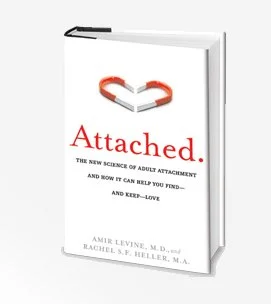
Attached – by Amir Levine & Rachel Heller
These two perspectives, though written decades apart, speak to each other in an interesting way.
Fromm describes love not as something we fall into, but as an orientation. A way of relating that requires discipline, awareness, and intention.
“Love is not primarily a relationship to a specific person; it is an attitude, an orientation of character.”
In contrast, Attached brings a modern psychological lens, showing how our attachment systems shape the way we experience closeness, distance, and inconsistency in relationships.
When placed side by side, they offer both a philosophical and practical question:
If love is something we practice, and attachment influences how we experience connection, then what are we reinforcing when we stay in ambiguity?
Are we developing the capacity for clear, secure connection?
Or are we becoming more familiar with inconsistency, avoidance, or anxious pursuit?
Article of the Week
Situationships: The Cost of Staying in the Undefined
Situationships are no longer occasional experiences in dating; they are becoming a pattern that many people find themselves in despite increased awareness of attachment styles and relational dynamics. This article explores why ambiguity persists, even among those who are thoughtful and intentional about relationships. It looks at how modern dating culture, emotional readiness, and communication gaps all contribute to undefined connections. There is also a focus on what these dynamics do to the nervous system over time, particularly the cycle of anticipation and absence that can create instability. Rather than framing situationships as simply avoidant or dysfunctional, this piece considers whether they reflect a lack of relational skill-building. Ultimately, it invites a deeper question about whether ambiguity is allowing connection to unfold or postponing the clarity needed to build something more grounded.
New Ideas
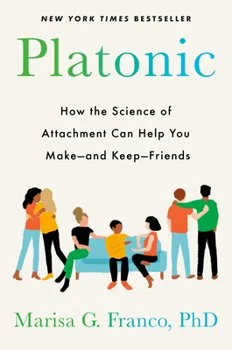
This book offers a refreshing perspective on connection by focusing on the behaviors that sustain closeness rather than the idea of finding the right person. It emphasizes that relationships are built through consistency, expressed care, and follow-through over time. In the context of modern dating, this becomes especially relevant when chemistry exists but stability does not. The book challenges the assumption that connection should feel effortless and instead reframes it as something that is actively created. It also broadens the lens beyond romantic relationships, highlighting how all forms of connection influence our capacity for intimacy. This makes it a useful complement to conversations about ambiguity, where consistency is often the missing element.
Inspiration
"The Art of Loving" + "Attached"
These two books, written in very different eras, offer a compelling contrast between philosophy and modern psychology. One frames love as a practice that requires intention, awareness, and discipline, while the other explains how our attachment systems shape the way we experience connection. Together, they highlight the difference between the desire for love and the capacity to participate in it. They also invite reflection on how we respond to inconsistency, closeness, and emotional risk. When viewed side by side, they suggest that relationships are not only about compatibility, but about what we are reinforcing through our patterns. This pairing offers both a deeper understanding and a practical lens for navigating modern dating dynamics.

Closing Reflection
If you find yourself in something undefined, it does not necessarily mean you are doing something wrong. But it is worth paying attention to what the dynamic is reinforcing. Because relationships are not only about who we choose, they are also about what we practice. Over time, we tend to become very familiar with the patterns we repeat.
If you are noticing patterns in your dating life or finding yourself in relationships that feel unclear, this is the work I explore with clients in both one-on-one coaching and my dating groups.
You can learn more or schedule a session here:
If you are looking for more structure in this process, my dating journal was designed to help you reflect after each interaction so that you are not relying only on memory or initial impressions. It allows you to track what you are actually experiencing over time.
And if you are wanting deeper support, my dating course and coaching work are designed to help you navigate this stage with more awareness, intention, and steadiness.
You can explore all of these resources on my website.
Reflective Prompt
Take a few moments to consider your own experience:
Where in your current or past relationships have you stayed in something undefined longer than you wanted to?
What were you hoping would become clearer over time without needing to be named?
How did ambiguity affect your sense of stability or emotional grounding in that relationship?
When communication felt inconsistent, what did you notice in your thoughts or behaviors? Did you move toward, pull back, or try to regulate the connection in some way?
What conversations did you avoid, and what felt at risk if you had them?
Looking back, were there moments where clarity was available, but difficult to initiate?
And more importantly:
What kind of relationship do you want to practice being in?
Somatic Check-In
If you bring to mind a relationship that felt ambiguous, notice what happens in your body.
Do you feel a sense of ease, contraction, anticipation, or restlessness?
Does your body feel settled, or like it is waiting for something?
This can offer information that is often clearer than the story we tell ourselves.